
Last updated November 21, 2026
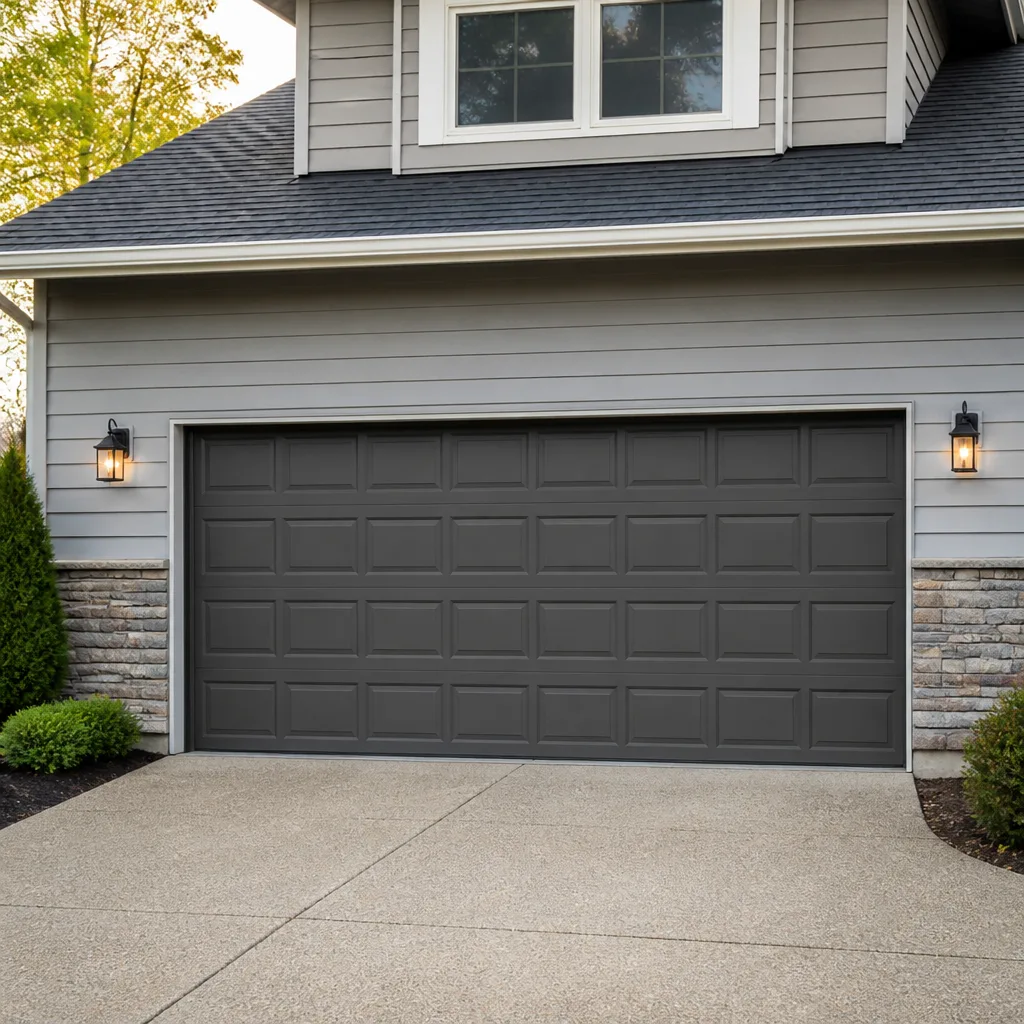 Raised-panel steel
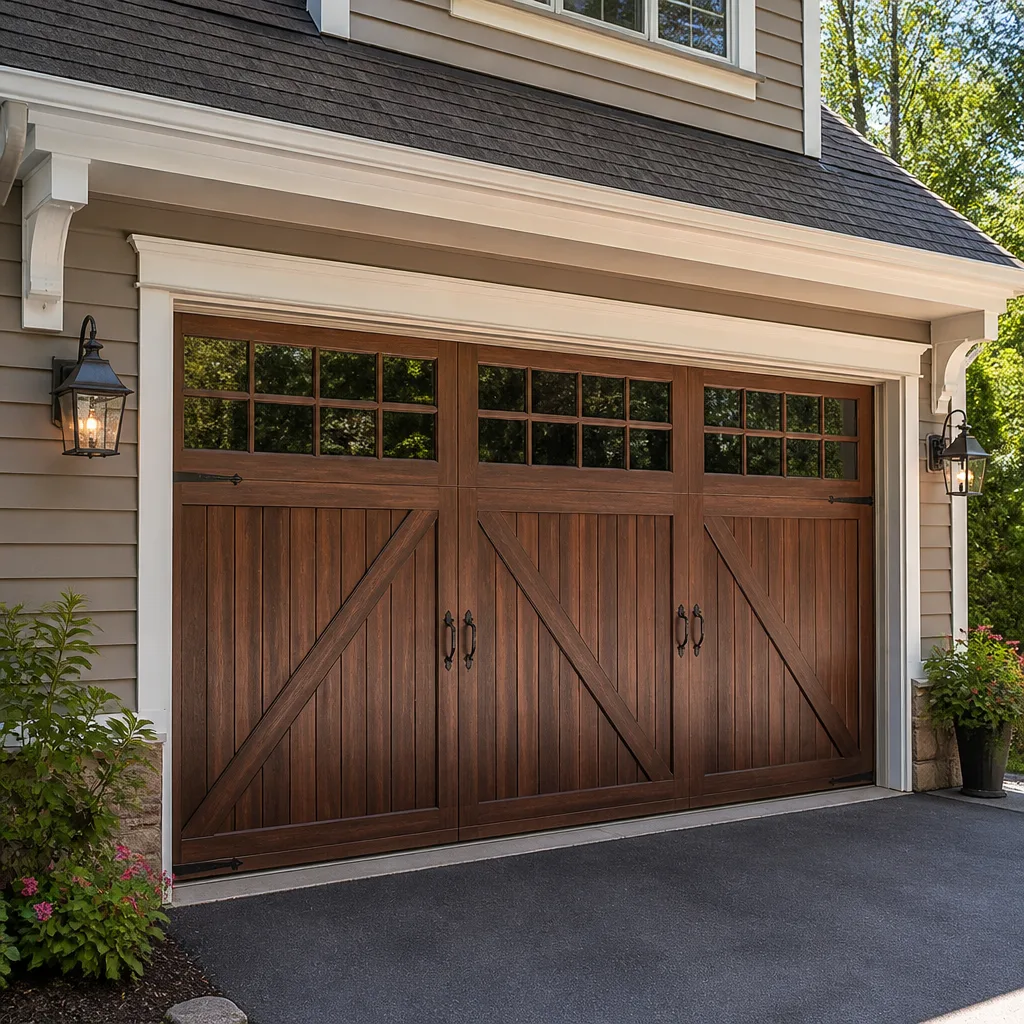 Carriage house
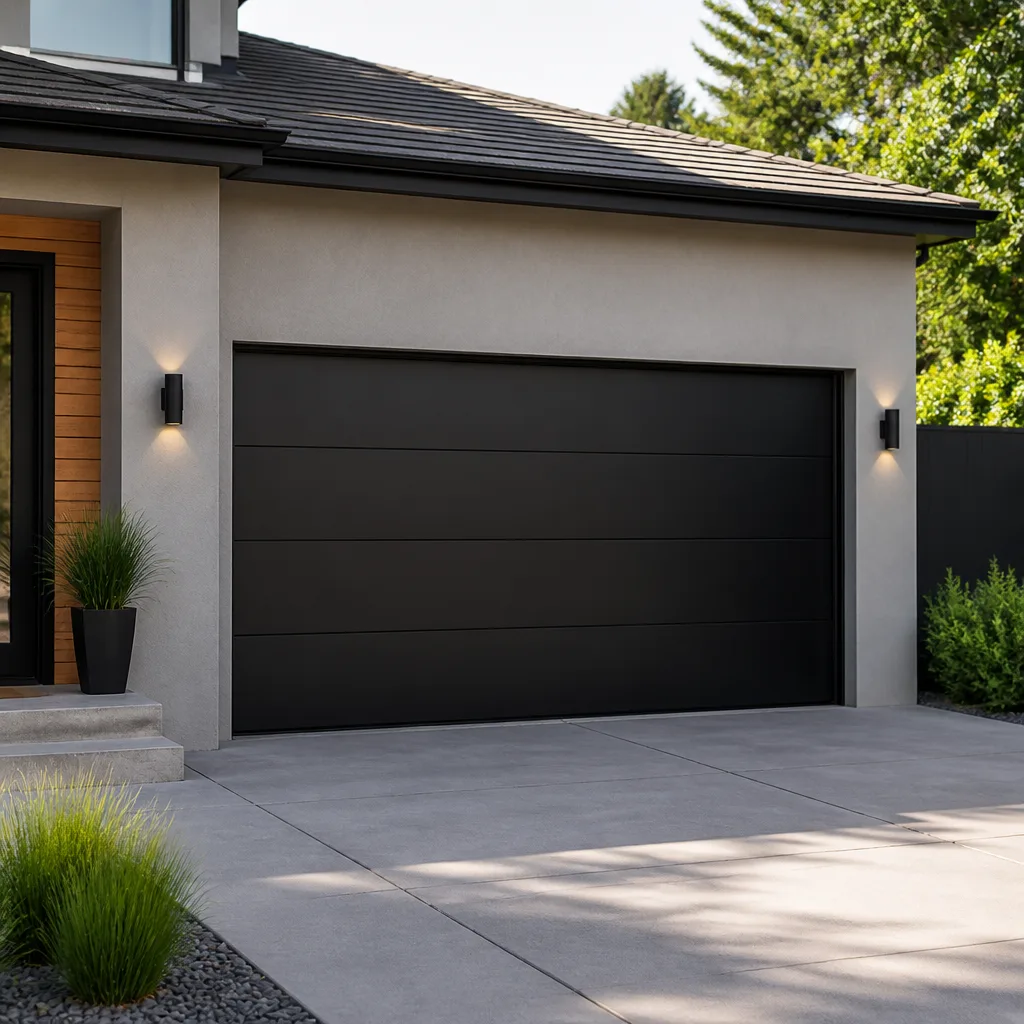 Modern flush
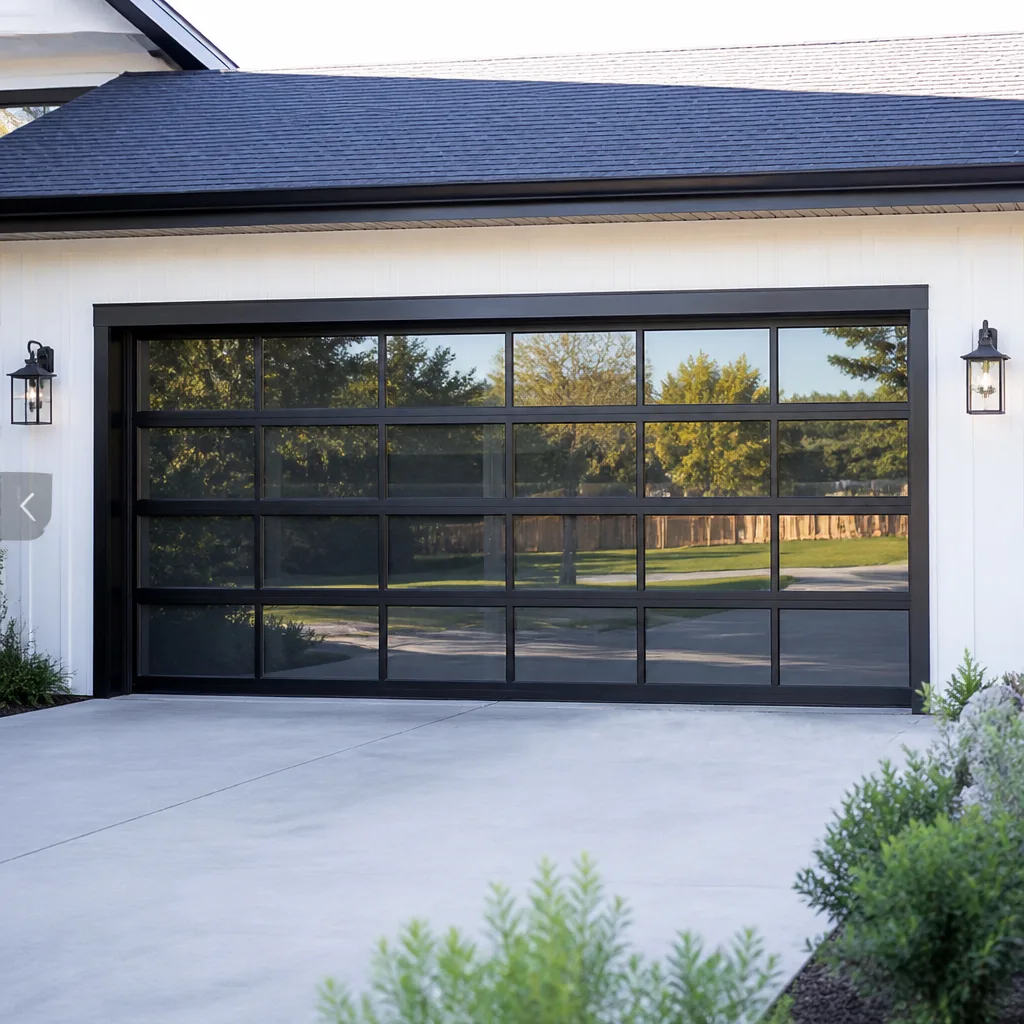 Full-view glass
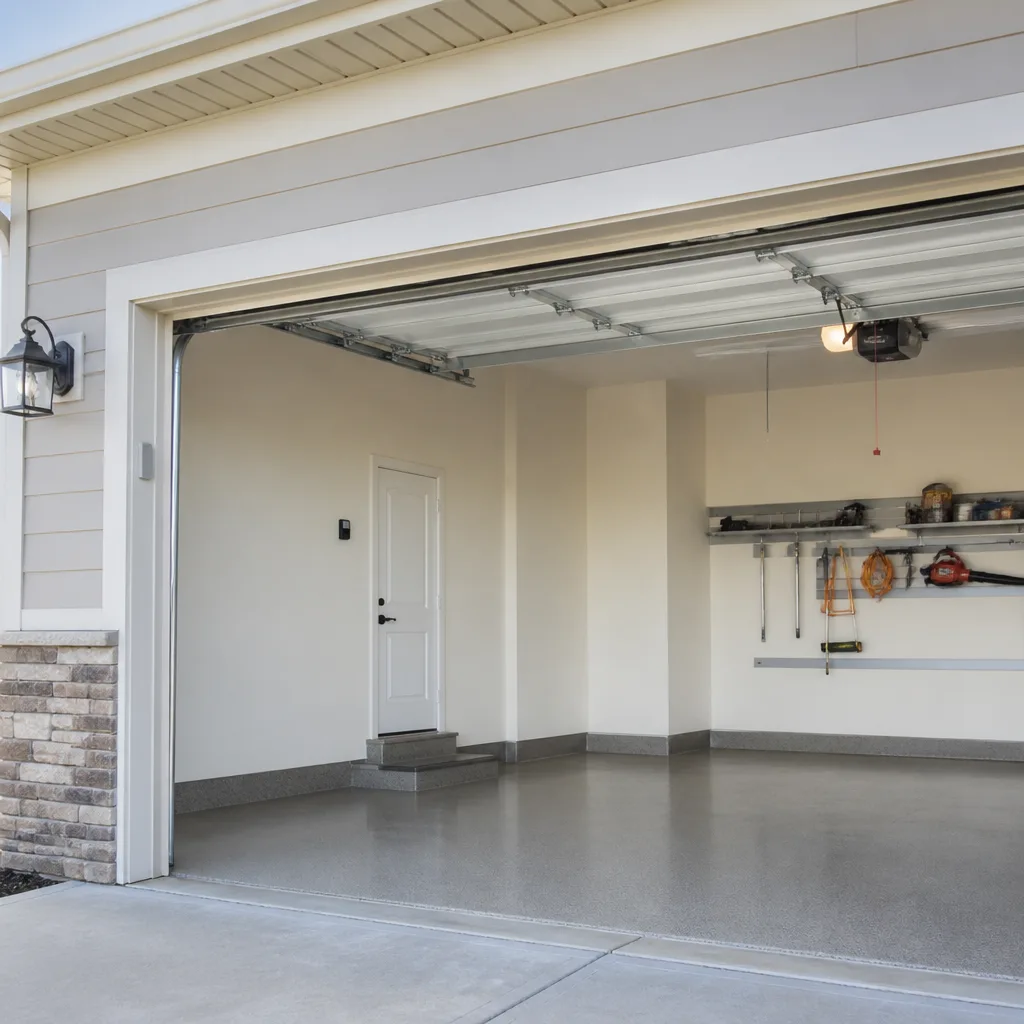 LiftMaster openers
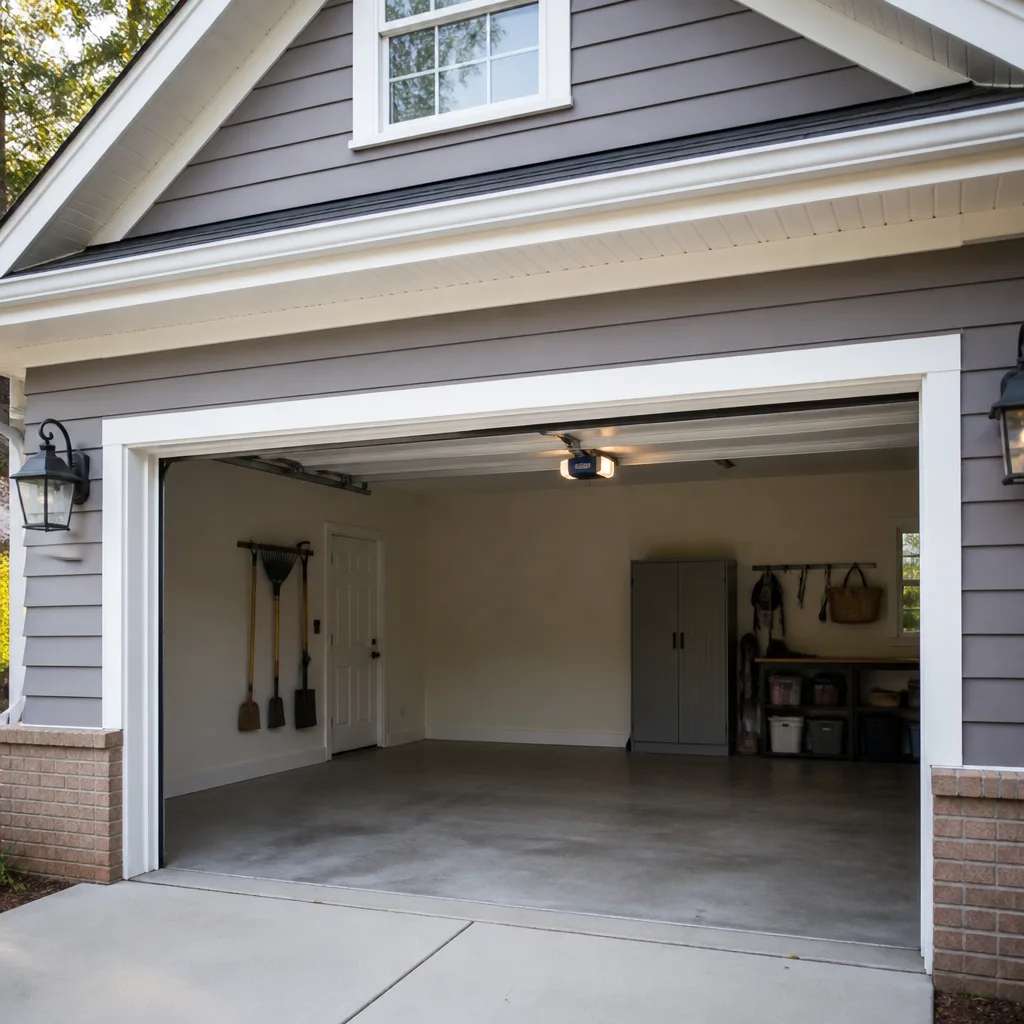 Chamberlain openers
Full 25-point door and opener safety check with every visit - springs, cables, rollers, tracks, and your LiftMaster or Chamberlain opener included
You get a price before we start. It does not change when the pro arrives.
Get your free estimateThe Complete Guide to Garage Doors in Georgetown
Most Georgetown garages were built before automatic openers existed. That single fact changes nearly every decision a homeowner makes about their door. A carriage house built for a horse and wagon in the early 1900s was never designed around a torsion spring, a photo-eye safety sensor, or a ceiling-mounted motor. The opening is narrower, the headroom is tighter, and the alley approach leaves no room for error. In this guide we’ll walk through what actually works in Georgetown: how the alley-access layout shapes door width and opener placement, which styles fit DC preservation guidelines, why carriage house and flush steel doors dominate this zip code, and the exact sequence to follow before you buy anything. This is written for homeowners who already know the brand on their door and want a straight answer, not a sales pitch.
Quick Answer
A garage door in Georgetown is chosen around three hard constraints: the narrow alley-access opening, the limited ceiling headroom above the door, and the DC preservation rules that govern visible exterior changes in the Old Georgetown Historic District. In most cases, a flush steel or carriage house style door in a steel or wood-look finish, paired with a jackshaft or low-clearance opener, solves all three at once. Measure the opening first, check permit and preservation requirements second, and pick hardware last. Get that order right and the rest of the decision gets much simpler.
Styles & brands we work with
- Raised-panel steel
- Carriage house
- Modern flush
- Full-view glass
- LiftMaster openers
- Chamberlain openers
Table of Contents
- How Alley-Access Garages Change the Math
- Historic Preservation Rules and Door Styles
- Why Carriage House and Flush Steel Dominate Georgetown
- Can Your Existing Frame Support Insulated Panels?
- The Right Sequence: Measure, Permit, Hardware
- Openers for Small, Tight, and Smart Openings
- What Georgetown Owners Should Check
- What Garage Door Work Costs in Georgetown
How Alley-Access Garages Change the Math
Georgetown’s residential blocks are built around rear alleys, not wide suburban driveways. A driveway in Georgetown is often 9 or 10 feet wide and runs straight back to a door that faces the alley wall. That layout creates constraints that a standard garage door guide never mentions.
The first is width. Many Georgetown garages were built for a single car that was considerably smaller than anything on the road now. An opening that measures 8 feet clear leaves almost no margin for a modern vehicle, and the door behind it has to match the opening exactly. If your opening is 8 feet, you order an 8-foot door. If it is 9 feet, you need a 9-foot door. There is no “close enough” here, because a panel that overhangs the opening will scrape the jamb on the way down and eventually tear out the hinges.
The second is headroom. In a modern suburban garage, you typically have 12 to 15 inches of clearance above the door in its raised position, which is plenty for a belt drive opener mounted on the ceiling. In a Georgetown carriage house the ceiling may be 7 feet or less. That leaves two real options:
- Low-clearance opener: a rail-style unit designed to fit into 5 to 7 inches of headroom.
- Jackshaft opener: a side-mounted unit that drives the torsion shaft directly and needs no ceiling space at all.
The third is the alley approach. Backing a car down a narrow Georgetown alley into a garage door takes concentration. A door that is too heavy, too slow, or fitted with a stiff opener will make every morning feel like a driving test. In our experience, an easy pull-up on the opener and a properly balanced door make far more difference on this layout than any feature you pay extra for.
One practical note: the outside of the door faces a shared alley, and that surface gets bumped. A steel backer or a thicker gauge panel holds up better than a thin one. When you plan a garage door repair on an alley-facing door, look at the bottom section and the hinges first, because that is where alley traffic leaves marks.
Historic Preservation Rules and Door Styles
The Old Georgetown Historic District covers a large share of the residential blocks in this neighborhood. If your property sits inside that boundary and your garage faces a public street or visible alley, an exterior change to the door may need review before it goes up. We don’t give legal advice, and we don’t issue permits. What we can tell you is that the process is predictable, and the styles that sail through are broadly the same ones that look at home on a Georgetown carriage house.
Here is the sequence that tends to work:
- Confirm the district. Ask DC’s historic preservation office whether your address is inside the Old Georgetown Historic District. A garage set back off an alley may still be covered if it is visible from a public way.
- Read the design guidance for garages. The district guidance addresses door materials, panel patterns, colors, and how replacement doors should relate to the original. Ask for the specific section rather than relying on a generic summary.
- Collect product literature. Bring the manufacturer’s spec sheet and a color sample to the review. A Clopay or Amarr catalog sheet showing the panel style and finish does more than a verbal description.
- Get written approval before you order. A door with a long lead time is expensive to return. Approval first, order second.
- Ask whether a building permit is also required. Most cities require a permit for a structural change to a garage opening, and DC is no different. The building department will tell you whether your project qualifies.
The styles that clear review most often are straightforward: flush steel in a flat or subtly raised panel, carriage house designs with applied hardware, and painted finishes that match the trim on the house. Bright metallic finishes, ornate modern designs, and full-glass doors tend to draw comments. If you want a specific look, ask early rather than discovering the problem after the door is on the truck.
Why Carriage House and Flush Steel Dominate Georgetown
Two door styles show up over and over on Georgetown garages, and it isn’t an accident. Carriage house doors reference the original swing-out and early overhead doors the neighborhood was built around. Flush steel doors do the opposite: they get out of the way, hold a clean line under an older facade, and don’t compete with the house for attention.
Here’s what each style actually means for you day to day:
| Style | What it fits | Parts and upkeep |
|---|---|---|
| Carriage house (raised or applied panel) | Older facades, brick and stucco, tight alleys where the door is partly visible from the street | Applied hardware can be replaced one piece at a time; painted wood-look finishes need periodic repainting |
| Flush steel (smooth panel) | Clean lines under a low ceiling, modern renovations, tight openings | Panels are standard sizes, hinges and rollers are widely available, finish holds up with occasional cleaning |
| Raised panel steel | Transitional homes where you want some depth without applied hardware | Common panel sizes; easy to match when one section needs replacing |
The practical consequence is parts availability. A flush steel door from Clopay or Amarr uses standard hinges, rollers, and bottom brackets that any garage door specialist should be able to source. A custom carriage house door with a proprietary panel profile is a different story. If one lower panel gets damaged by an alley bump, you may be waiting weeks for a replacement rather than having one fitted on a normal service call.
That matters when you’re deciding what to install and when you’re repairing what’s already there. If you’re weighing a repair against replacement, our guide to garage door repair covers the diagnostics for each door type, and a specialist can tell you within a few minutes whether a panel is replaceable or the whole door needs to come off. In our experience on Georgetown carriage house conversions, the hinge and bottom section take most of the wear, and those are the two parts worth checking whenever the door starts to hang unevenly.
Can Your Existing Frame Support Insulated Panels?
Insulated doors weigh more than non-insulated ones. A single-car steel door can weigh 90 to 150 pounds uninsulated; an insulated panel door of the same size can run 150 to 250 pounds or more. The frame has to carry that weight, and the springs have to balance it.
Insulation is desirable in Georgetown for two reasons. The first is summer heat in a garage that sits under an older house. The second is that many Georgetown garages share a wall or ceiling with a living space, and an insulated door keeps some of that heat from bleeding out through the door into the alley. But the upgrade has to be done properly, and a few checks tell you whether your existing frame is ready.
Here’s what a specialist looks at before installing insulated panels on an older frame:
- Jamb condition: soft or crumbling wood in the side jambs means new framing work, not just a new door.
- Header strength: a sagging header can’t carry the load of a heavier door and will need reinforcing.
- Spring balance: the torsion spring must be sized for the new door weight. Reusing the old spring on a heavier door is a fast route to a broken spring.
- Tracks: heavier doors put more strain on the vertical and horizontal tracks. Older bent or rusted track should be replaced at the same time.
- Threshold and floor: a new insulated door will sit differently on a settled concrete floor. A weather seal closes the gap that shows up afterward.
If the frame passes these checks, you can usually go ahead with an insulated door without structural modification. If it doesn’t, a specialist will tell you. Frame repair adds work, but it’s work worth doing before a heavier door goes up, not after.
The Right Sequence: Measure, Permit, Hardware
The most common order-of-operations mistake we hear about is buying hardware before measuring, or ordering a door before checking whether the district will approve it. Geeting that sequence right saves both money and weeks of waiting.
Here’s the sequence we recommend for any Georgetown owner planning a repair or replacement project:
- Measure the opening. Measure the width and height at the widest points, and measure the headroom above the door in its raised position. Write it all down before you call anyone. A 1/8-inch error changes the door you can buy.
- Check the district and permit requirements. Call the city’s historic preservation office and the building department. Ask about the Old Georgetown Historic District and whether your project needs a permit. Do this before you price anything, because approval can change the door you’ll be allowed to install.
- Get a professional measure and a written quote. A specialist will confirm the opening, check the frame, and put together a written estimate that names the door, the opener, and the installation. That quote sets the price. The estimate itself is free.
- Choose the door and opener. Now that you know what fits, what the district allows, and what the quote covers, pick the panel style, material, and opener. If your garage has low headroom, this is where you select a jackshaft or low-clearance opener.
- Schedule the install with the door on site. A door with a long lead time is not ready for installation until it arrives. Order it, wait for delivery, then schedule the install.
- Test the safety systems on completion. Photo-eyes, auto-reverse, and force limits need to be checked and adjusted as part of the install. That’s a step, not an afterthought.
Every one of these steps depends on measurement. If you skip step one, you’ll end up comparing doors that don’t fit your opening. Skip step two and you may fall in love with a door the district won’t approve. Scheduling the install before the door arrives just moves the wait to a worse moment.
For a full replacement, our guide to garage door installation covers the whole sequence in more detail, including what to have ready before the crew arrives. If you’re unsure whether your door is worth replacing at all, an in-person inspection is the cheapest way to find out.
Openers for Small, Tight, and Smart Openings
The opener matters more in Georgetown than it does in most places, because you’re fitting modern hardware into a space built for a person pulling a door up by hand. Three categories cover almost every Georgetown garage.
Jackshaft openers. Side-mounted to the torsion shaft, these units need no ceiling space at all. They’re the obvious pick for a carriage house with a tight ceiling and an alley-facing door, because the door still clears a car parked inside. They also leave the ceiling space free for storage. The trade-off is that a jackshaft opener depends on a properly balanced door, so the springs have to be right.
Low-clearance rail openers. A rail opener fitted with a low-clearance kit fits into 5 to 7 inches of headroom. This is the standard solution for a garage where the jackshaft doesn’t fit, and it works well for both legacy and modern units from LiftMaster, Chamberlain, and Genie.
Smart-connected openers. LiftMaster myQ and Genie Aladdin Connect let you open and close the door from a phone and get a notification if the door is left up. For an alley-access garage where the door is out of sight from the house, that feature earns its keep. Being able to check from the kitchen whether the door closed is worth more here than it is on a suburban driveway.
If you already have an opener and it’s misbehaving, opener problems usually show up as specific symptoms. A door that opens a few inches and stops, reverses for no reason, or runs but doesn’t move usually points to one of the safety sensors, the force limits, or the drive gear inside the unit. Our page on garage door opener repair covers the diagnostic trail. A technician can usually tell in a few minutes whether the fix is a sensor alignment, a gear swap, or a replacement.
What Georgetown Owners Should Check
Georgetown’s summer heat and wet winters do a specific kind of damage to a garage door. The cycle of a hot, humid July and a cold, damp January is hard on wood-look panels, on any painted surface, and on the springs and hinges that bear the weight every day. A short yearly check catches most of it before it becomes a service call.
Here’s what to look for, in about 15 minutes:
- Balance test: disconnect the opener, lift the door halfway, and let go. A correctly balanced door stays roughly where you left it. If it slams down or rises on its own, the springs are tired.
- Visual spring check: look at the torsion spring above the door and the extension springs at the sides. A visible gap in the spring coil means the spring is broken. Do not try to fix it yourself. Spring repair is one of the most dangerous DIY repairs a homeowner can attempt, and we treat it as a specialty because of that.
- Hinge and roller inspection: open the door and look at the hinges and rollers. Rust, cracked rollers, or a hinge that wobbles in its mount should be replaced.
- Weather seal: check the seal at the bottom of the door. A worn seal lets in water and cold air and lets pests in through the gap.
- Safety sensor check: wave something in front of the photo-eyes. If the door doesn’t reverse, the sensors are misaligned or the wiring is loose. This is a safety issue, not a convenience issue.
- Lubrication: a small amount of door-specific lubricant on the hinges, rollers, and spring coils keeps things quiet. Don’t use heavy grease, which attracts grit in a dusty alley.
If any of that turns up a broken spring or a sagging door, stop using the opener. A door held up by a bad spring puts the full weight of the door onto the opener, which will fail. When the door won’t move at all, an emergency call may be the right answer, because a stuck door in an alley-access garage can trap the car and leave the home unsecured. If you’d rather not wait, garage door repair is the service that handles those same-day calls.
Two of the checks above (the balance test and the spring inspection) are worth doing every spring. The rest can be done whenever you’re in the garage. And if you ever hear a loud snap from above the door followed by a car that won’t come out, that’s a broken spring, and it’s a stop-and-call situation.
What Garage Door Work Costs in Georgetown
Pricing in Georgetown depends on the opening, the door type, and the state of the frame, so any number below is a typical starting range, not a final quote. The written estimate, agreed before any work begins, is what you’ll pay. That’s the point of getting the measure first.
Here’s what typical work looks like, line-item:
| Job | Typical range |
|---|---|
| Torsion spring replacement (one spring) | $180-$340 |
| Torsion spring replacement (matched pair, common on single-car doors) | $360-$680 |
| Opener repair (sensor, gear, or control board) | $120-$280 |
| Opener replacement (unit plus installation) | $340-$650 |
| One lower panel replacement (standard sizes) | $200-$450 |
| New door installation, single-car, non-custom | $900-$2,200 |
| New door installation, single-car, carriage house style | $1,800-$3,500 |
| Full door and opener package, single-car | $1,200-$2,800 |
Two caveats on those numbers. First, the spring ranges are per spring. A matched pair is usually replaced together, so a pair costs about twice the single-spring range. Second, a carriage house door with a custom panel profile, an applied hardware set, or a non-standard opening will sit at the top of its range or above it. The measure tells you which side of the range you’re on.
The good news for Georgetown: standard-size flush steel doors are common in this market, and a door that uses standard panels gives you an easier path to parts when something needs replacing later. If you want a written number for your specific door, call and ask for a free measure. You’ll get a written estimate, and that estimate is what you’ll be invoiced.
Common Mistakes to Avoid
- Buying a door before measuring the opening. An 8-foot opening needs an 8-foot door. A door that fits “close enough” will overhang the jamb. Measure first, then shop.
- Skipping the preservation check. Ordering a door the Old Georgetown Historic District won’t approve is a long and expensive detour. Ask the historic preservation office before you spend a dollar on hardware.
- Reusing old springs on a heavier new door. If you upgrade to insulated panels, the springs have to be resized for the new weight. Reusing the old spring shortens its life and takes the opener with it.
- Choosing a ceiling-mounted opener for a low-headroom garage. A standard ceiling opener will not fit in 7 feet of headroom. Check the clearance before you pick the unit, and lean toward a jackshaft or low-clearance model.
- Ignoring a snapped spring. A door held up by a broken spring is being supported almost entirely by the opener, which will fail too. Stop using the door and call a technician.
- Fitting custom carriage house panels without checking parts. A proprietary panel profile means weeks of waiting when a lower section gets bumped in the alley. Standard panels are easier to source.
- Choosing a door for the neighborhood’s look and not the opener’s needs. Aesthetic fit and mechanical fit are two separate questions. A door that looks right in the alley still has to work with the headroom and the opener you can install.
See the difference
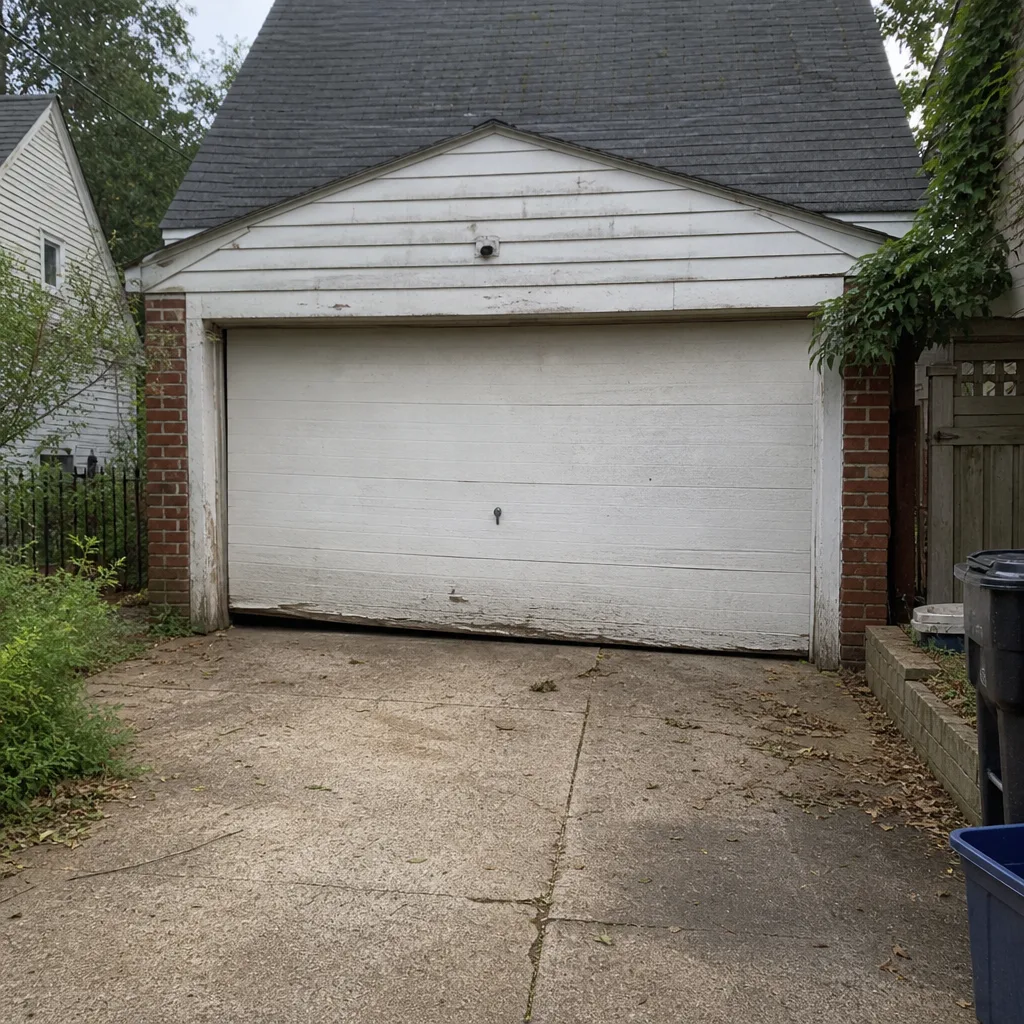 Before
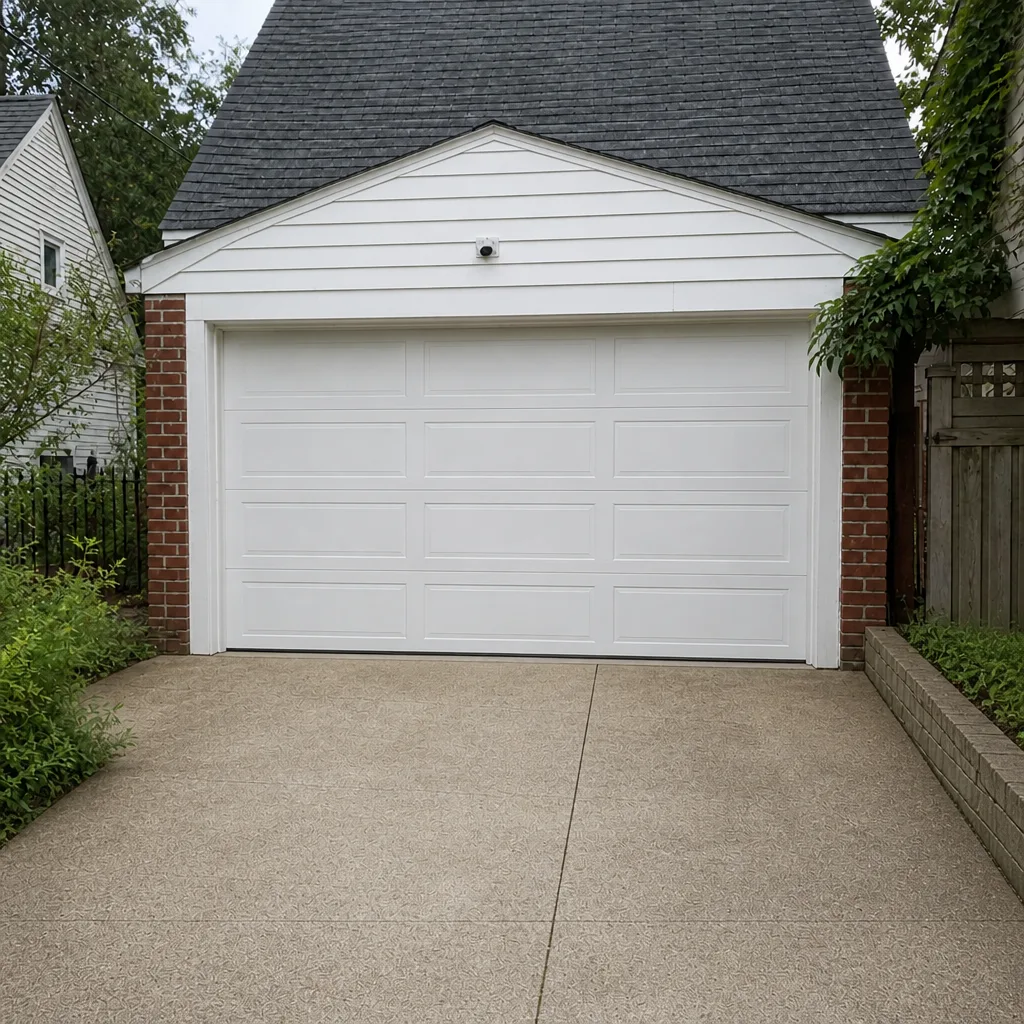 After
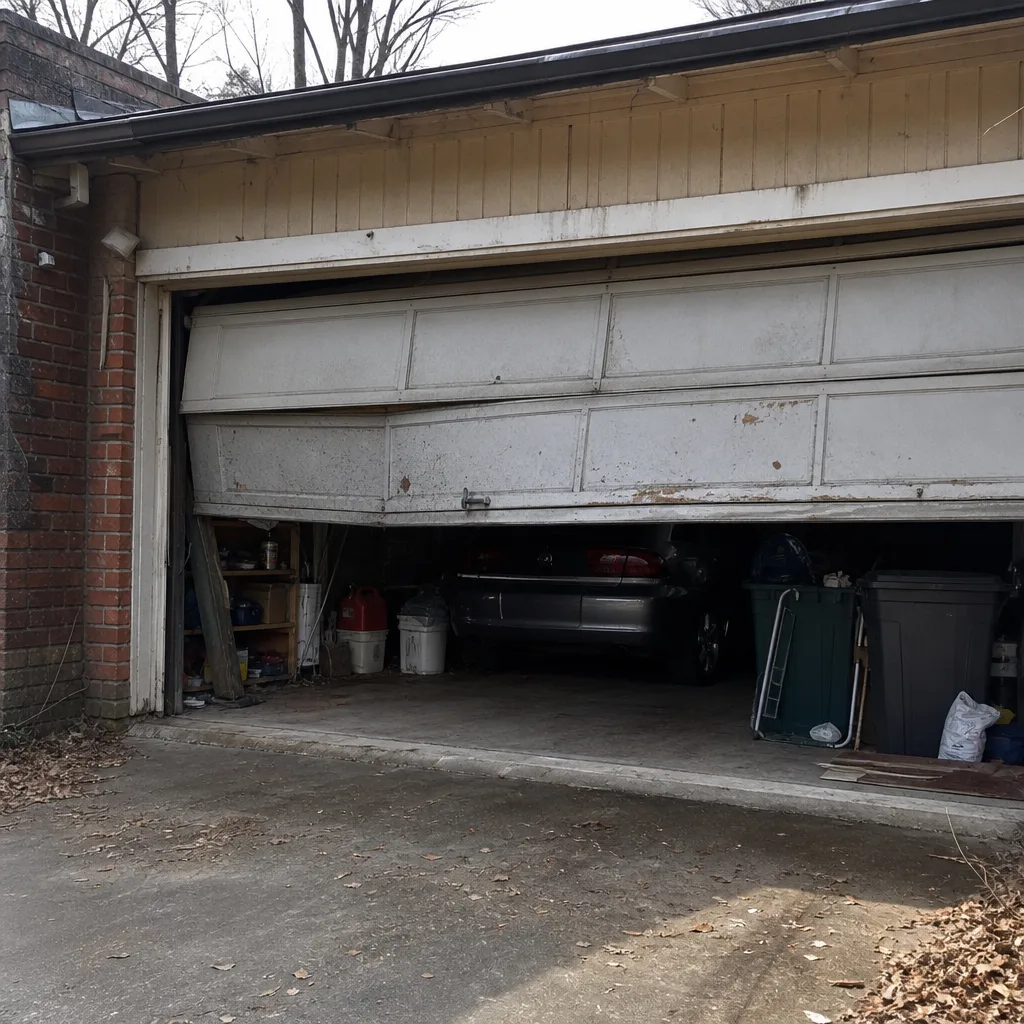 Before
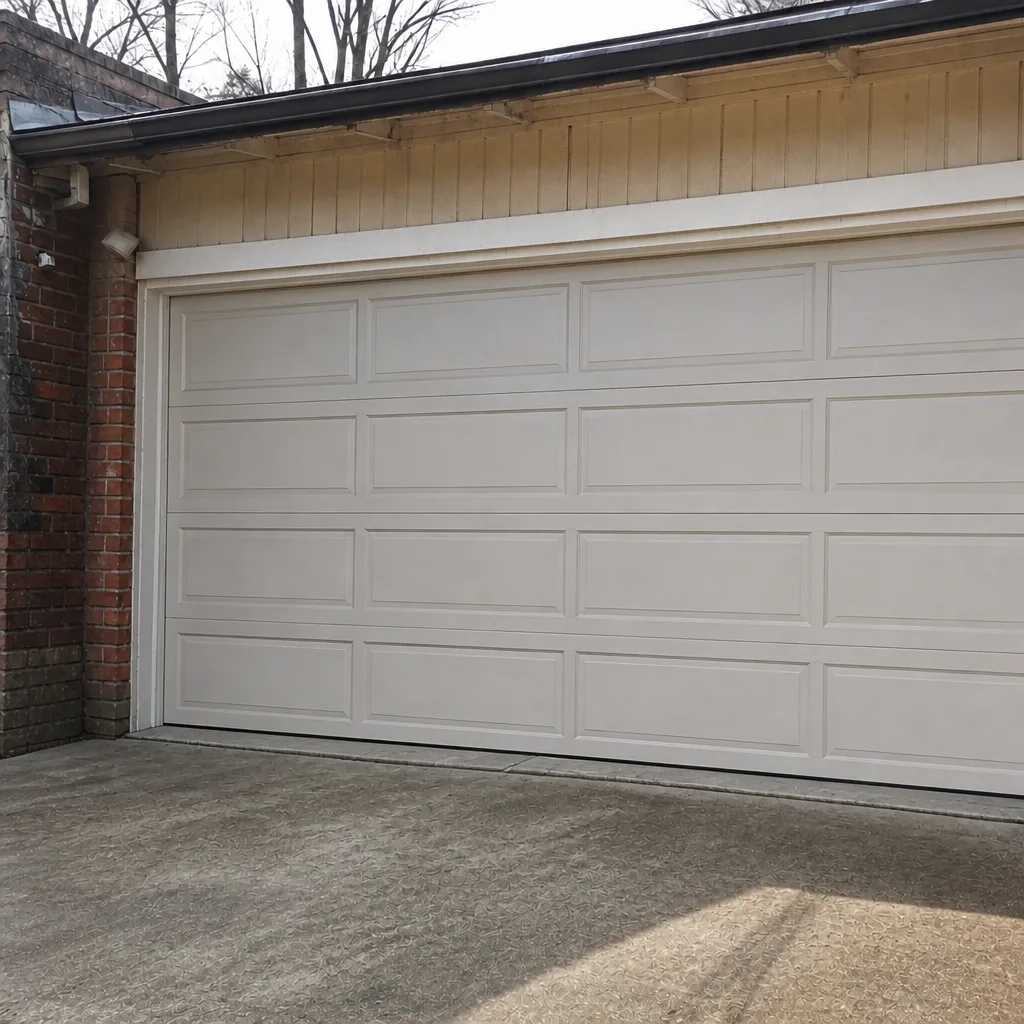 After
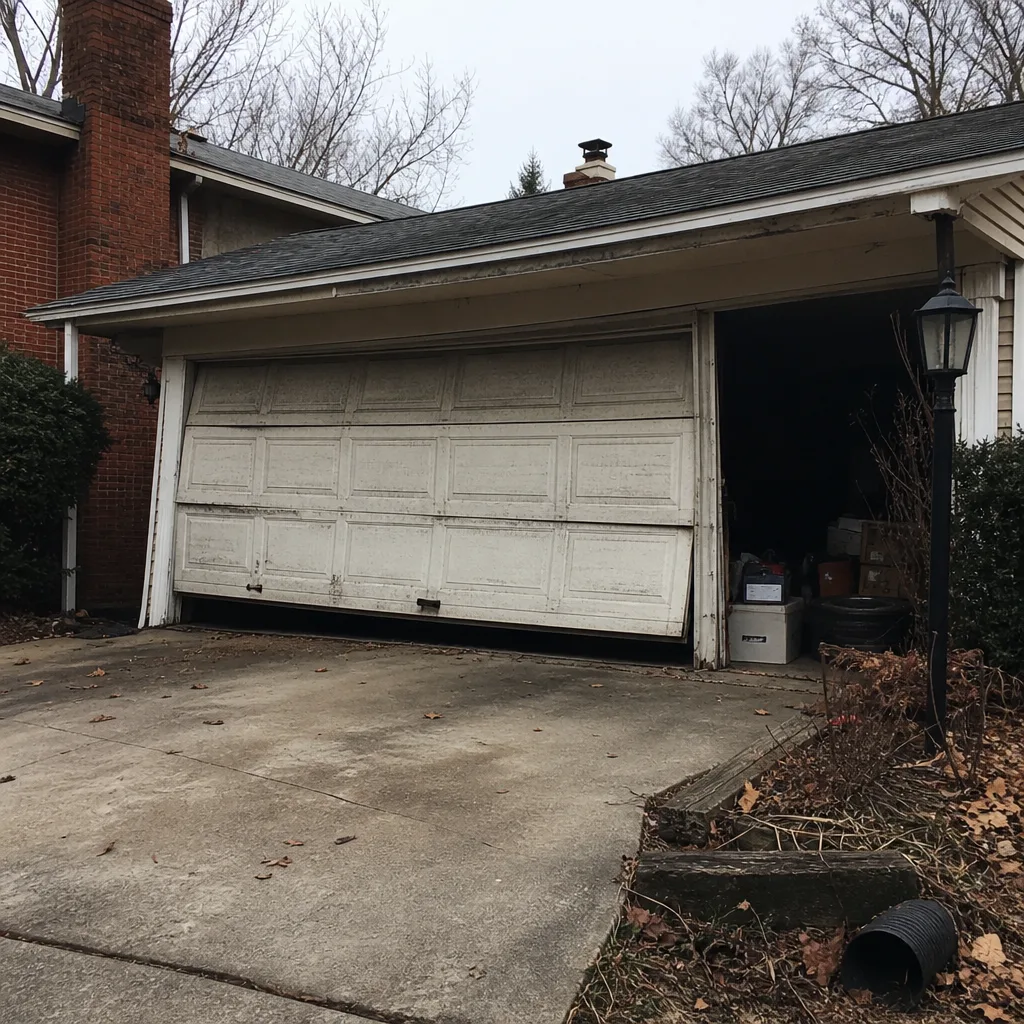 Before
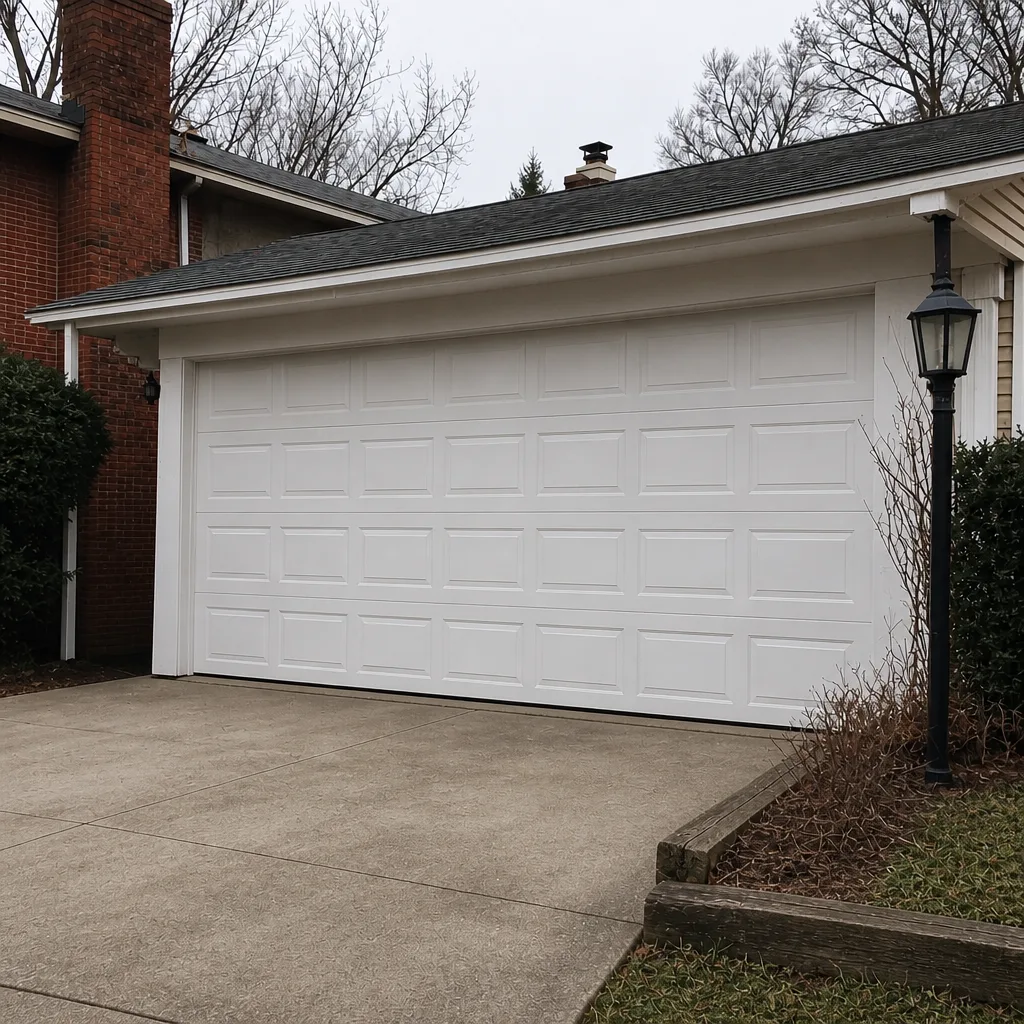 After
When to Call a Professional
Some issues on a Georgetown garage door are obvious in the first thirty seconds: a snapped spring, a door stuck halfway, a car trapped in an alley-access garage, an opener that hums but doesn’t move the door, or a door that has jumped its track. Those aren’t weekend projects, and they’re not a good fit for a general handyman. Call a specialist.
A few other situations call for a trained technician. Any frame that has gone soft at the jamb is a structural question, not just a door question, and a heavier insulated door puts more load on it. Preservation district approval, in practice, is easier to navigate when the person measuring your opening has already worked in the district. And if the door is only 2 or 3 years old but already running unevenly, that’s a balance or track alignment issue and worth fixing before it wears out the opener.
For a routine replacement, our garage door repair team can inspect and advise, and our garage door installation team handles the full new-door path once the measure is done. Georgetown Garage Door Repair Pros offers free estimates in Georgetown. Call (877) 676-2031. We answer 24/7. Fast dispatch from 7am to 7pm, Sunday through Friday, and we’re closed Saturday.
Frequently Asked Questions
A typical single-car garage door replacement in Georgetown runs about $900 to $2,200 for a standard door, and $1,800 to $3,500 for a carriage house style, installed. The written estimate sets the final price, so get a measure before you commit. Call (877) 676-2031 for a free estimate.
If your garage is inside the district and visible from a public way, you may need review before the door goes up. Call DC’s historic preservation office first with your address. Bring manufacturer’s literature and a finish sample, and get approval in writing before you order the door. For a free measure and an honest read on what the process involves, call (877) 676-2031.
We work on LiftMaster, Chamberlain, Genie, Clopay, Amarr, Wayne Dalton, Craftsman, and Raynor equipment, so there’s no “we don’t service that brand” dead end. That covers legacy openers and current Wi-Fi-connected units like LiftMaster myQ and Genie Aladdin Connect. Call (877) 676-2031 and tell us the brand on your door.
Torsion spring replacement typically runs $180-$340 for one spring, and $360-$680 for a matched pair, which is what most single-car doors get. Spring repair is dangerous work and we treat it as a core specialty, not a side job. Call (877) 676-2031 and we’ll give you a written estimate before any work starts.
No. Installation is scheduled work, not same-day work, because the door has to be measured, ordered, and delivered before it can go up. Spring and opener repair is the same-day side of the business. For a free measure and a written quote, call (877) 676-2031. We answer 24/7 and dispatch from 7am to 7pm, Sunday through Friday.
Often yes, but only if the frame can carry the extra weight. An insulated door in an older carriage house reduces heat loss into the alley and quiets the door. Have the jamb, header, tracks, and spring balance checked first, and resize the springs for the heavier door. Call (877) 676-2031 for a free on-site measure.
The Bottom Line
A garage door project in Georgetown is a measurement problem first, a permit problem second, and a hardware problem third. Get those three in that order and the decisions get simpler. A narrow alley opening defines your door width. A low ceiling determines your opener. The Old Georgetown Historic District determines what the door can look like. Do all three checks before you buy and you’ll avoid the two most expensive detours: a door that doesn’t fit and a door the district won’t approve. Springs and openers are the repair side of the house, and springs in particular are a stop-and-call fix, not a weekend project. Whether it’s your opener, your springs, or the door itself, the goal is the same: back up and running, with a written estimate agreed before any work starts and no surprises on the invoice.
Contact
If you’re ready for a real number on your specific door, call Georgetown Garage Door Repair Pros at (877) 676-2031 for a free estimate. We service LiftMaster, Chamberlain, Genie, Clopay, Amarr, Wayne Dalton, Craftsman, and Raynor equipment, handle spring repair as a specialty, and cover opener diagnostics and full door installation. Call (877) 676-2031. We answer 24/7. Fast dispatch from 7am to 7pm, Sunday through Friday, and we’re closed Saturday.
Written by the team at Georgetown Garage Door Repair Pros.